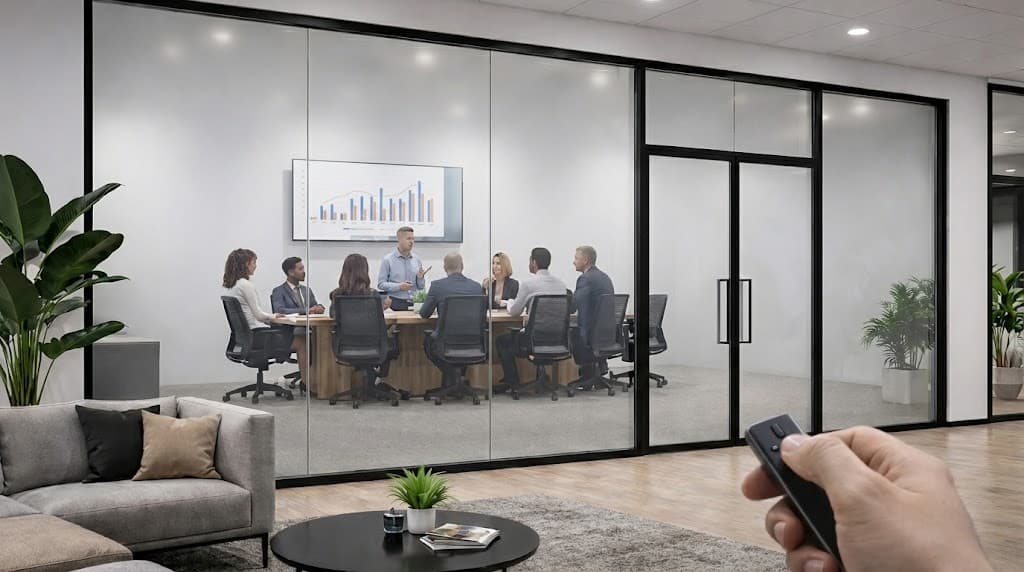
When exploring privacy glass solutions, you'll encounter two main technologies: smart film and smart glass. While both offer the same core functionality - instant privacy control through switchable transparency - they differ significantly in installation, cost, performance, and best-use scenarios. This comprehensive guide will help you understand the differences and choose the right solution for your project.
Understanding the Basics
What is Smart Film?
Smart film (also called PDLC film or switchable film) is a thin, flexible polymer layer that can be applied to existing glass surfaces. It's essentially a retrofit solution that transforms regular glass into smart, switchable glass.
- Thickness: 0.2-0.4mm (extremely thin)
- Application: Applied to existing glass using adhesive
- Flexibility: Can be cut to custom sizes on-site
- Installation: Non-invasive, can be done without removing glass
What is Smart Glass?
Smart glass (also called switchable glass or privacy glass) is a complete glass unit with the PDLC technology already integrated between glass panes during manufacturing. It's a replacement solution that requires removing existing glass.
- Thickness: 10-25mm (standard insulated glass unit)
- Application: Complete glass replacement required
- Structure: PDLC layer laminated between two or more glass panes
- Installation: Requires removing existing glass and installing new units
Key Differences: Side-by-Side Comparison
1. Installation Process
- Process: Film is applied directly to existing glass surface
- Time: 1-3 days depending on project size
- Disruption: Minimal - work can often continue around installation
- Complexity: Moderate - requires skilled technicians
- Tools Required: Squeegee, heat gun, cutting tools, power supply connection
- Best For: Retrofit projects, existing buildings, quick installations
- Process: Existing glass must be removed, new glass units installed
- Time: 3-7 days (including glass manufacturing lead time)
- Disruption: Significant - area may need to be vacated
- Complexity: High - requires glazing professionals
- Tools Required: Glass removal equipment, crane/lifting equipment, glazing tools
- Best For: New construction, major renovations, complete replacements
2. Cost Comparison
- Material Cost: ₹800-1,500 per square foot
- Installation Cost: ₹200-400 per square foot
- Total Project Cost: ₹1,000-1,900 per square foot
- Additional Costs: Power supply, busbars, control system
- Cost Factors:
- - Lower for large areas (economies of scale)
- - No glass replacement costs
- - Minimal structural modifications needed
- Material Cost: ₹2,000-4,000 per square foot
- Installation Cost: ₹500-1,000 per square foot
- Total Project Cost: ₹2,500-5,000 per square foot
- Additional Costs: Glass removal, disposal, structural modifications
- Cost Factors:
- - Higher material costs (complete glass units)
- - Higher installation complexity
- - Potential structural modifications
Cost Savings with Smart Film: Typically 40-60% less expensive than smart glass for retrofit projects.
3. Performance & Quality
#### Visual Quality
- Transparency (ON): 75-85% light transmittance
- Opacity (OFF): 5-15% visibility (excellent privacy)
- Clarity: Slightly lower than smart glass due to film layer
- Edge Visibility: May have slight edge visibility on very large panels
- Uniformity: Excellent on properly installed film
- Transparency (ON): 80-90% light transmittance
- Opacity (OFF): 3-10% visibility (superior privacy)
- Clarity: Superior clarity, like regular glass
- Edge Visibility: No edge visibility issues
- Uniformity: Perfect uniformity across entire panel
#### Durability & Lifespan
- Lifespan: 8-12 years with proper maintenance
- Warranty: Typically 3-5 years
- Maintenance: Periodic cleaning, occasional film replacement
- Vulnerability: Can be damaged by sharp objects, requires careful handling
- Replacement: Individual panels can be replaced if damaged
- Lifespan: 15-20+ years
- Warranty: Typically 5-10 years
- Maintenance: Standard glass cleaning, very low maintenance
- Vulnerability: More resistant to damage, protected between glass layers
- Replacement: Entire glass unit must be replaced if damaged
4. Energy Efficiency
Both technologies offer similar energy efficiency benefits:
- UV Protection: Both block 99% of harmful UV rays
- Heat Reduction: Both reduce solar heat gain by 25-30%
- Power Consumption: Both consume 5-7W per square meter
- Insulation: Smart glass offers slightly better insulation (double/triple pane construction)
5. Application Flexibility
- Custom Sizes: Can be cut on-site to fit any size
- Curved Surfaces: Can be applied to curved glass (with proper technique)
- Quick Installation: Faster project completion
- Minimal Disruption: Work can continue around installation
- Retrofit Friendly: Perfect for existing buildings
- Perfect Finish: Seamless, professional appearance
- No Visible Edges: Clean, integrated look
- Better Insulation: Multi-pane construction offers better thermal performance
- Structural Integrity: Can be used in structural glazing applications
- New Construction: Ideal for new builds and major renovations
When to Choose Smart Film
Best Scenarios for Smart Film:
- - Existing buildings with glass already installed
- - No need to replace existing glass
- - Cost-effective upgrade solution
- - Need smart glass functionality at lower cost
- - Large area coverage required
- - Quick ROI important
- - Tight deadlines
- - Minimal disruption required
- - Temporary or semi-permanent solutions
- - Irregular window sizes
- - Curved glass surfaces
- - On-site customization needed
- - Non-permanent installations
- - Easy removal if needed
- - Lower upfront investment
Real-World Examples:
- Office Buildings: Upgrading existing conference room windows
- Hospitals: Adding privacy to existing patient room windows
- Hotels: Retrofit bathroom privacy solutions
- Residential: Home window privacy upgrades
When to Choose Smart Glass
Best Scenarios for Smart Glass:
- - Building from scratch
- - Glass specification in design phase
- - Long-term investment priority
- - Complete glass replacement planned
- - Structural modifications acceptable
- - Premium finish required
- - High-end commercial spaces
- - Luxury residential projects
- - Maximum quality and durability needed
- - Structural glazing requirements
- - Load-bearing glass applications
- - Architectural glass features
- - 15+ year ownership planned
- - Minimal maintenance desired
- - Maximum durability priority
Real-World Examples:
- New Office Buildings: Specified in architectural plans
- Luxury Hotels: Premium guest room installations
- High-End Residences: Custom home construction
- Commercial Facades: Architectural feature installations
Installation Process Comparison
Smart Film Installation Steps:
- Site Preparation: Clean existing glass thoroughly
- Film Cutting: Cut film to exact measurements
- Application: Apply film using wet application method
- Smoothing: Remove air bubbles and ensure proper adhesion
- Busbar Installation: Apply conductive strips for power
- Power Supply: Connect AC voltage controller
- Testing: Verify switching functionality
- Cleanup: Remove protective layers, final cleaning
Total Time: 1-3 days for typical project
Smart Glass Installation Steps:
- Measurement: Precise measurements for glass manufacturing
- Glass Manufacturing: 2-4 weeks lead time (off-site)
- Site Preparation: Remove existing glass, prepare openings
- Structural Work: Any required modifications
- Glass Delivery: Transport and handling of glass units
- Installation: Professional glazing installation
- Power Supply: Connect electrical systems
- Testing & Commissioning: Full system testing
Total Time: 3-7 days installation + 2-4 weeks manufacturing
Maintenance & Care
Smart Film Maintenance:
- Daily: Standard glass cleaning
- Weekly: Check for air bubbles or lifting edges
- Monthly: Inspect electrical connections
- Annually: Professional inspection and maintenance
- Issues: Can be repaired on-site, individual panels replaceable
Smart Glass Maintenance:
- Daily: Standard glass cleaning
- Monthly: Check electrical connections
- Annually: Professional system inspection
- Issues: Entire unit replacement if damaged (rare)
Cost-Benefit Analysis
Smart Film ROI:
- Initial Investment: Lower upfront cost
- Installation Speed: Faster project completion = lower labor costs
- Flexibility: Can be removed/replaced if needed
- Best ROI: Retrofit projects, large areas, budget-conscious clients
Smart Glass ROI:
- Initial Investment: Higher upfront cost
- Longevity: Longer lifespan = lower long-term cost
- Durability: Less maintenance and replacement needed
- Best ROI: New construction, premium projects, long-term ownership
Common Misconceptions
Myth 1: "Smart Glass is Always Better"
Reality: Smart film is often the better choice for retrofit projects and budget-conscious applications. The "better" solution depends on your specific needs.
Myth 2: "Smart Film Doesn't Last Long"
Reality: Modern smart film lasts 8-12 years with proper installation and maintenance, which is sufficient for most applications.
Myth 3: "Smart Glass is Too Expensive"
Reality: While initial cost is higher, smart glass offers better long-term value for new construction and premium projects.
Myth 4: "Smart Film Looks Unprofessional"
Reality: Properly installed smart film is virtually indistinguishable from smart glass to the untrained eye.
Making the Right Choice: Decision Matrix
Choose Smart Film If:
- ✅ Existing glass in place
- ✅ Budget is a primary concern
- ✅ Quick installation needed
- ✅ Retrofit/renovation project
- ✅ Custom shapes or curved surfaces
- ✅ Temporary or semi-permanent solution
Choose Smart Glass If:
- ✅ New construction project
- ✅ Premium quality priority
- ✅ Long-term durability critical
- ✅ Maximum clarity needed
- ✅ Structural glazing required
- ✅ Complete renovation planned
Hybrid Solutions
In some cases, a combination of both technologies works best:
- Smart Glass: For main windows and primary areas
- Smart Film: For secondary areas, partitions, or budget optimization
This approach maximizes benefits while managing costs effectively.
Industry Trends & Future Outlook
Smart Film Trends:
- Improving durability and lifespan
- Better clarity and performance
- Easier installation processes
- Lower costs through manufacturing improvements
Smart Glass Trends:
- Integration with smart building systems
- Improved energy efficiency
- Architectural integration
- Custom design options
Conclusion: Which Should You Choose?
The choice between smart film and smart glass depends on your specific project requirements:
- Retrofit projects
- Budget-conscious applications
- Quick installations
- Existing buildings
- Custom or irregular shapes
- New construction
- Premium projects
- Long-term investments
- Maximum quality requirements
- Structural applications
Both technologies offer excellent privacy control, energy efficiency, and modern aesthetics. The right choice depends on your project's specific needs, budget, timeline, and long-term goals.
At Shreesha Tech, we provide both smart film and smart glass solutions, helping you choose the perfect option for your project. Our expert team can assess your requirements and recommend the best solution based on your specific needs.
---
Ready to transform your space with smart glass technology? Contact Shreesha Tech today for expert consultation, detailed project assessment, and professional installation services across India. We'll help you choose the right solution and ensure a successful project from start to finish.